

Letting go of the mask of perfection
What my daughter needed wasn't a perfect mother

The next ‘Estrangement Book Club’ livestream will be on Tuesday 8th September at 7pm BST/11am PDT/2pm EST. I will be discussing Nick Flynn’s memoir ‘Another bullshit night in suck city’ with Monica Cardenas, PhD. Nick Flynn first met his father when he was working as a caseworker in a homeless shelter in Boston. As a teenager he’d received letters from this stranger father, a self-proclaimed poet and con man doing time in federal prison for bank robbery. The memoir tells the story of the trajectory that led Nick and his father onto the streets, into that shelter, and finally to each other. Register here.
This week’s post is part of an ongoing series where readers share their experiences of estrangement. If you’d like to share your experience on this Substack, then leave a comment and I’ll get in touch with you.
Family Estrangement’s policy on the use of AI and the veracity of citations.
My mother has often told me that, at the moment of my birth, she looked into my tiny new face and saw wisdom: an old soul, the one who would save her.
“I see you as my mother,” she told me.
I was nineteen or twenty, sitting on the phone with her in the mall parking garage trying to piece together what was happening and why things had become the way they had become; trying to understand the screaming and the chaos and the carousel of rejection, clinging, and punishment.
“When you left me to go to college, it was my mother dying and leaving me all over again.”
It was one of the first moments that the implicit became text, became something I could actually step back and look at. I was handed a role and a duty at the moment of my birth: to be my mother’s emotional keeper, to be her caretaker. To maintain a sense of equilibrium, and indeed to feel a sense of safety at all, I stopped being a child and instead became an environment - a placid room, a still point of gravity for her to orbit around, lest she become completely untethered and fly off the surface of the earth. I was the container, the little sage, the one who could absorb the madness and the intensity, could soothe the hurt and the terror and the shame that she laid at my feet as if I were the only one who could make it better.
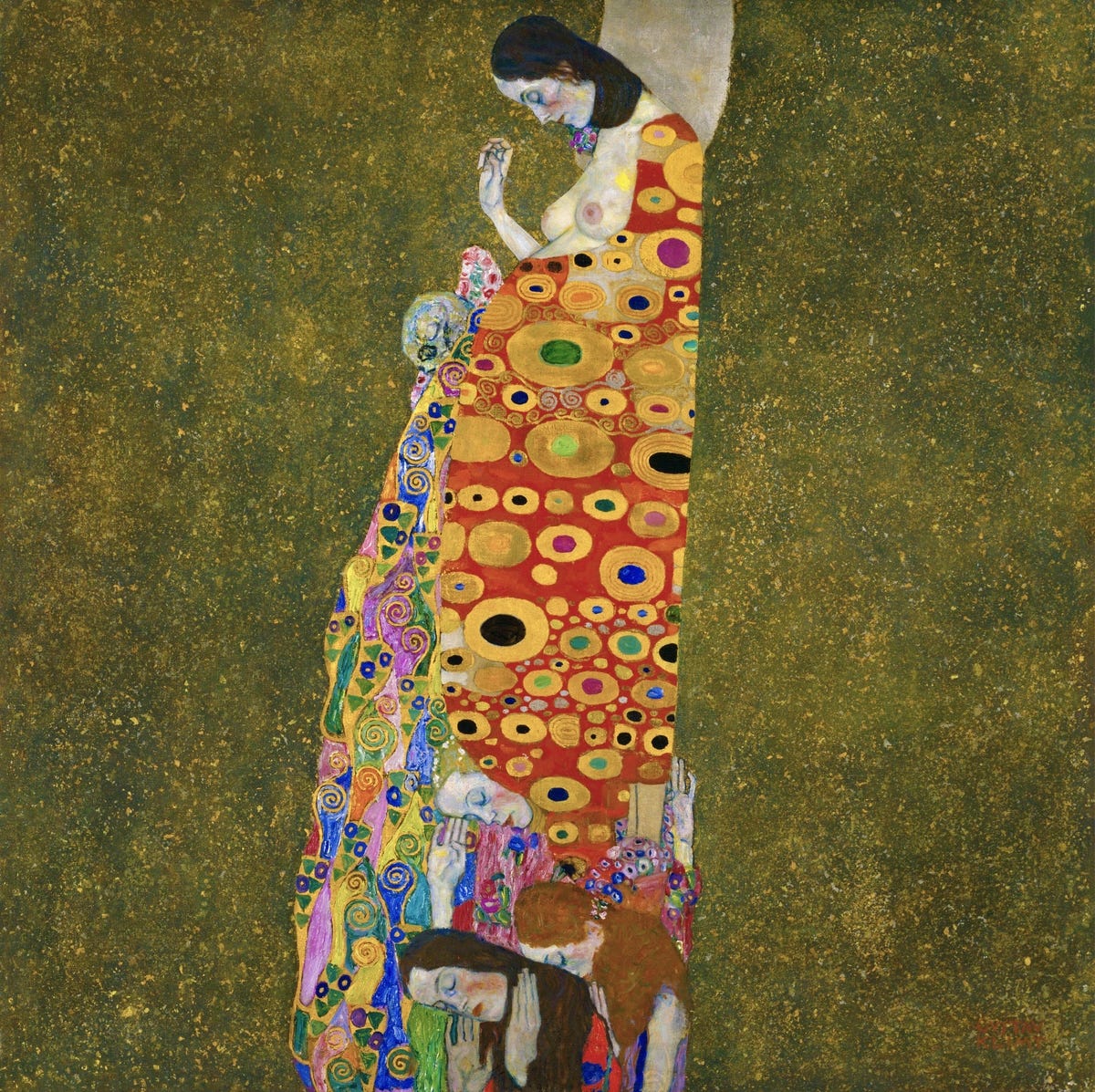
I learned to retreat inward, to not make sudden movements, for something as simple as a heavy footfall on the staircase could set off a barrage of suspicion and recrimination, and accusations that I did not love her, and that my friends were turning me against her. I took her at her word in those moments - my heavy footfall on the stair must have been evidence of my inner rot, my betrayal of her, the monstrous self within that needed to be subdued. To remain safe and to protect myself and my mother against the constant threat of her total collapse, I needed to remain unseen - to be a mirror that reflected back something pleasing to her, something reassuring, something kind, something helpful. I saw this as an act of love: protecting my mother, helping her, saving her. It wasn’t until my twenties that I started to wonder why the project never finished, why we never arrived at the moment when she would be my mother.
Despite many years of estrangement, years of therapy, and years spent within the agonizing, laborious process of differentiating from a mother who will only accept fully merging and nothing less, I have always struggled to separate myself from this internal contract: to be an environment pleasing to others.
When I let go of being that environment for my mother, I did not release myself from the contract itself, and when I became pregnant and gave birth to my own daughter, I entered matrescence with this old logic of care fully intact: be a mirror pleasing to others. Your inner world will harm your child.
Perfection is not enough: you must be gravity itself, a still point that needs nothing, wants nothing, and never errs from the physics of its role. The monster within must be subdued - not because I was fearing my child, but because, on some level, I still believed that it was my fault that my mother was the way she was, and that to be seen was to not only be unsafe, but to make others unsafe. Beyond that, I was still nursing my own wounds from a mother who did not have boundaries with her emotions, who was so open with them that I became the parent, and bore her feelings and her wounds within my own body. And so the lesson had two faces, but in both, the message was clear: subdue the monster of feeling within. But the monster can’t be subdued, only internalized.
This is not a wound that existed only within my family, or in the particular relationship between my mother and me. Indeed, the interior weather of my family was in some ways reflected and reinforced by the cultural narratives that my mother also lived within, in which the role of mother became symbol and not subject.
Our society is obsessed with the idea of the perfect mother. To become a mother is, in some ways, to stop being a human and to become an archetype in the eyes of society - the archetype of the perfect mother, the good mother, the loving mother. Because an archetype is a symbol and not a person, it is fixed, it only holds what the archetypal energies allow for, and all else gets pushed into shadow - the shadow realm of the bad mother, the devouring mother, the imperfect mother, the one who fails. This societal obsession with the perfect, good mother prevents us from coming to know our mothers, and ourselves as mothers, as subjects and not objects.
I experienced it even when I became estranged from my mother, in the messages I received from the people around me who wanted me to return to a relationship with her. My mother, too, is not an archetype - she herself is a subject, a human being, unfixed and complex and changeable - yet the inability of others (and, at times, myself) to see her beyond the archetype of “mother” made it feel as if I was speaking to people who were looking right through me. I was disappearing into it, the child, the human being, who got completely lost in the madness of societal scripts and expectations and fears.
Now that I’m a mother, I understand it more, because I too feel the terror, the knowledge that I am not an archetype of a perfect mother, but rather a living, breathing mortal who will, inevitably, fail, falter, and plant seeds that my child will one day have to sift through. This is a humiliating experience - not humiliating, as in ‘embarrassing’, but humiliating as in: being made humble, being brought to the earth.
There was a moment when all of this started to pool within me like the tide of a tsunami, mindless and quick and silent, suddenly rendering me neck-deep in water that was rising, fast. I was hungry, hormonal, exhausted from not sleeping, overwhelmed by a medical issue, and it all suddenly became too much.
I felt the tension between my need to attend to myself and to be cared for and to express and emote and exist, and my deep training to hide, to not allow anyone to see, least of all my daughter, lest she see me and be burned by the heat of my existence.
As I stood, frozen, trying to hold all of this back, suddenly my daughter began to sob - not because anything had happened, and in fact she had just been playing quietly with her toys - she just began, inexplicably, to wail and cry.
Oh god, I thought, rushing to soothe her, I failed even at that. She saw me.
Eventually, my partner came back into the room and noticed the energy, and asked me what was wrong. In that moment, I had another choice: will I flee into absence with him, too? But pure instinct, some small voice within, told me to just stay put. Stay here. And so, instead of intellectualizing the feelings, I stayed still, and I stayed open, and allowed my partner to see me, and I wept, and I let him hold me. And as I wept, I noticed: my daughter’s entire body had relaxed. She went back to playing.
In that moment I realized that what my daughter needs, what she really needs, is not the mother holding it all in, the mask of the ‘happy mama’, but instead the mother who is willing to be imperfect, who is willing to be seen, and to be present, and to be a human being who fails and cries and needs and is taken care of, sometimes. Not by her, but maybe in front of her.
That moment marked a subtle but deeply significant change for me: a small opening toward the death of the archetype so that the mother can live. Despite the noise and the distortion of childhood, I was able to do what I’ve struggled for decades to do for myself, and trust the truth of my daughter’s body. She is too young to have any agenda, to understand any real emotional expectation, and in that, she is completely honest in her presence. What she communicated to me in that moment is that she needs me - my presence, even when my presence contains sorrow. My absence, in its illusion of perfection, means something to her - that absence is what might cause her to take on something that doesn’t belong to her, in an attempt to bring me back into relationship.
My presence, in its true imperfection, means something, too: it means a mother who can bear her own emotions, can seek comfort from other adults, and move through the moment without it breaking her, and without her leaving even while in the room. In lieu of a perfect blank environment, I can instead be her mother: not the symbol, not the object, but the person.
I will leave marks upon my daughter, and it’s the deepest hope of my life that most of the marks I make will be the marks of love - and yet I know that some of them will register with her as pain, and I will have to show up for that, too. I am beginning to see how adherence to this pressure to be a perfect mother actually takes me away from real relationship with my real child, and how it causes me to withdraw into myself and abandon her in my shame and my discomfort. But I love her too much to do that.
I love her more than my image of perfection.
I love her more than my fear.
I love her more than my shame.
And because of that, I am starting to be willing to be seen. I am finding that I want to shed the aspiration to be the good mother, the perfect mother. Instead, I hope to be able to exist in real relationship with my daughter: relationship that is messy, that can contain friction and tension and repair, that allows for her to be herself and not like me sometimes. I don’t want her to build a relationship with the good mother, the mask of happy mama, and always experience me as remote, as far-away, as inaccessible and inauthentic. I want her to be in relationship with the real me, even when the real me annoys her, is imperfect, messes up, and stumbles. I have to accept that I am only one part of my daughter’s journey of life, and she will have to live through grief and disillusionment and pain, even in her relationship with me - because that is part of being in real relationship with real people. Part of that means grieving what I could not be for my mother, and grieving what I did not receive myself. But beneath that grief, there is real healing - it’s the burn of the medicine finding the real wound.
Jacqueline Medel is a mother, a writer, and a poet who spends much of her time contemplating matrescence and motherhood, as well as the complexity and tragedy of family of origin wounds and intergenerational trauma. She believes that when mothers are seen as full human subjects across the generations, real healing becomes possible. She writes about matrescence, embodiment, intergenerational entanglements and the sacred at Moss Cathedral on Substack.
If you're a parent, have you ever struggled with the tension between being a "good parent" and being a real person?
What became possible when you stopped trying to be what someone else needed and allowed yourself to be who you are?
Message me if you’d like to share your experience or if you would like to talk about any skills you have that may help with estrangement.
Below are some other posts you might like to read:


If you’d like conversations like this in your inbox, subscribe for free - I write weekly for both estranged parents and estranged children trying to make sense of what’s happened.
This work takes time, and paid subscribers make it possible to keep building the community. Paid subscribers get:
a monthly supported journaling activity, designed to help you process estrangement at your own pace
recorded livestreams you can return to whenever you need them
full access to the paywalled archive, including past pieces on estrangement, reconciliation and grief
Not in a position to commit? That's completely understood - here are other ways to support the work:
Buying books through my curated bookshop:
 | A guest post by
|
So familiar......my mom's dad took off when she was 12...and her mom started drinking heavily at the bar down the street.. till wee hours. One night...the bar called my mom to come and get her off the roof where she was threatening to jump. At 13, in winter,my mom raced over..in PJs n' slippers and took her back home. So, like you, my mom, always expected me to take care of her needs. I felt like an adult at such a tender age. It's a heavy burden not to be free spirited as a child. Glad you are escaping from that prison. To be able to express what you feel...is a true blessing.
Wow!! As a therapist it is so hard to hear the mother who so clearly was an emotional untreated mess and how this was passed fown to her daughter who then came out of it with her own trauma and its consequence to her daughter….from generation to generation
Soooo very sad!!!!
But the expression and writing is so superb!! Thank you!